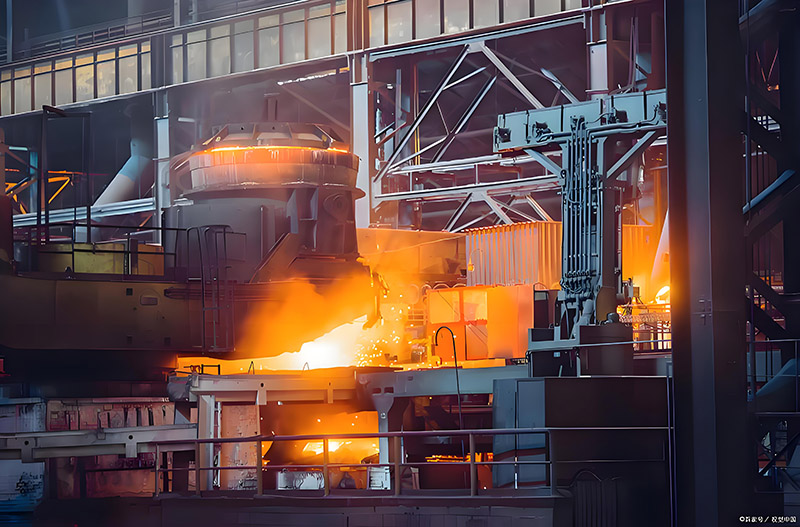
Stainless steel smelting process
1. Basic knowledge of stainless steel smelting
Stainless steel refers to an alloy steel with corrosion resistance. In stainless steel alloys, a certain proportion of chromium is required to form a corrosion-resistant film. To enhance the corrosion resistance of stainless steel, other alloying elements such as nickel, molybdenum, and vanadium are often added.
When smelting stainless steel, the following aspects should be noted:
1. Pay attention to the control of alloy element content and ratio
2. Control of heating temperature, heating rate, holding time, and cooling rate
3. The treatment and removal of oxides and impurities generated during the smelting process
II. Stainless steel smelting process flow
The process flow of stainless steel smelting mainly includes the following steps:
1. Preparation and pretreatment of raw materials. Based on the required content and ratio of alloy elements, the necessary raw materials are mixed and pretreated
2. Preparation before the furnace. Inspect and maintain the melting furnace, and preheat and dry the raw materials
3. Smelting process. The mixed raw materials are added to the smelting furnace for smelting, generally using the electric arc furnace smelting method.
4. Casting process. Pour the molten steel into the mold to form the desired product shape through casting
5. Heat treatment process. The obtained product undergoes heat treatment to achieve the desired physical and chemical properties, such as quenching, annealing, solution treatment, etc
III. Common problems and solutions in stainless steel smelting
During the smelting process of stainless steel, oxides may be generated and need to be removed. Common treatment methods include chemical treatment, mechanical removal, and gas reduction, etc
Improper heating time and temperature can lead to the volatilization and loss of alloy elements, affecting the content and quality of the alloy elements. It is necessary to control and optimize the heating parameters
3. Different stainless steel categories have varying requirements for temperature and cooling rates, necessitating adjustments based on specific circumstances
4. Improper selection and proportioning of raw materials can affect the quality of the final product. It is necessary to choose suitable raw materials and conduct strict proportioning control and quality inspection
In summary, to smelt stainless steel, one must possess certain fundamental knowledge and control techniques in order to produce high-quality stainless steel products.