
How are the pressure ratings of common flanges classified
Common flanges, due to their usage in different places, have certain differences in pressure ratings to a certain extent. For example, large stainless steel flanges are mainly used in high-temperature pipelines in chemical engineering, so there are high requirements for their material pressure-bearing performance.
Therefore, customers often request forged flanges, as the material's microstructure density is improved through forging, and its pressure-bearing capacity is also enhanced
here are clear grade requirements for the pressure resistance of large stainless steel flanges in both domestic and international standards. Large stainless steel flanges are generally classified into: PN25, PN6, PN10, PN16, PN25, PN40, etc. Among them, PN10 and PN16 are commonly used. A flange, also known as a flange disc or lug, is a component used for connecting between shafts and for connecting pipe ends. There are also flanges used at equipment inlets and outlets for connecting between two pieces of equipment, such as reducer flanges
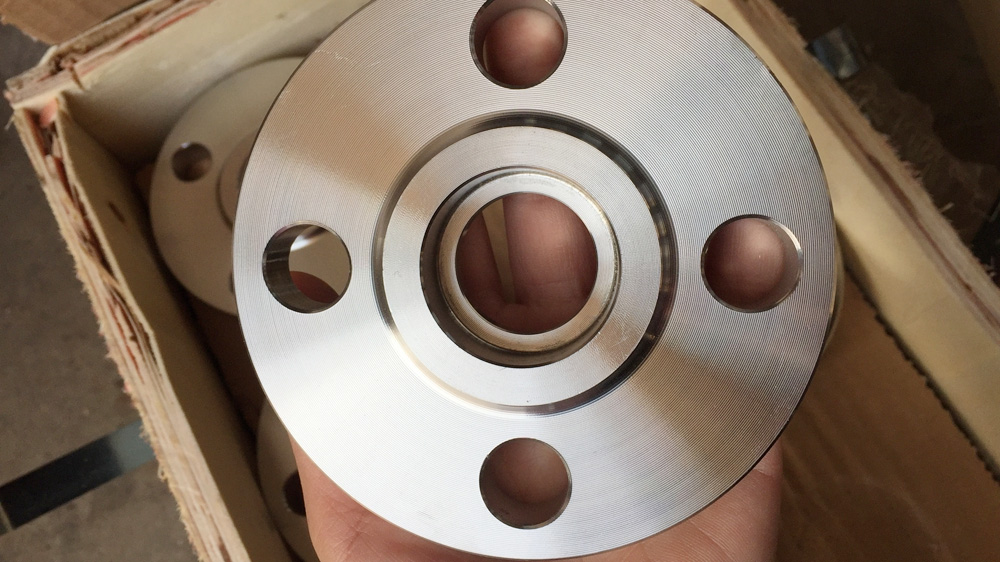
Flange connection or flange joint refers to a detachable connection consisting of a flange, gasket, and bolts interconnected as a combined sealing structure
The pressure rating of a flange is related to its design pressure to some extent, but they are not identical. It represents the strength series of a flange. The higher the pressure rating, the stronger the flange is
To be precise, given the material, design temperature, and design pressure, we can select a pressure rating for a type of pipeline in a process unit based on the temperature-pressure curve specified in the flange standard, and thereby determine the pressure ratings for valves and other pipe fittings.
Pressure ratings can be divided into European system, American system, etc. based on different flange standard systems, such as PN1.6, PN2.5, or CL150/PN2.0. When considering temperature, some standards combine the two. Due to the different applications of flanges, pressure ratings vary to some extent. For example, large stainless steel flanges are mainly used in high-temperature pipelines in chemical engineering, so there are high requirements for their material pressure-bearing performance.
Therefore, customers often request forged flanges because the material's structure density is improved through forging.